


7 Steps to California Dealer License Training for Family Businesses

Last Updated: October 25, 2026
Quick Summary
California dealer license training for family businesses works best when every relative who will hold a license or manage the business completes the same DMV-approved pre-license course, then splits the remaining tasks by role. Assign a course lead, paperwork lead, bond and location lead, records keeper, and a backup so no single person carries the whole application.
Confirm each course is on the California DMV list of approved dealer education providers before anyone pays for it.
A California dealer pre-license course is commonly described as six hours, but confirm the exact requirement with the DMV.
Choose retail or wholesale as a family before anyone enrolls, because the wrong choice means retraining and delay.
Only relatives who will hold a license or manage the business need the pre-license course.
The licensee stays legally responsible for compliance and cannot delegate accountability to an unlicensed relative.
Table of Contents
Why Family Businesses Need a Shared Training Plan
California Dealer Pre-License Training: What Each Family Member Completes
Choosing Your Dealer License Type as a Family Team
Retail vs. Wholesale: Which Fits Your Family Operation
California Wholesale Dealer License Requirements for Family Operations
The California Vehicle Dealer License Application Process, Step by Step
Documents the Whole Family Should Gather Early
Your Dealer License Compliance Checklist for the First Year
Monthly Compliance Checklist
How to Implement Each Item (and Avoid Common Family-Business Mistakes)
A Family-Friendly Compliance Workflow
Dividing Licensing Tasks Across the Family
Book Your Family's Dealer License Training Session
Frequently Asked Questions
Why Family Businesses Need a Shared Training Plan
California requires dealer applicants to complete DMV-approved pre-licensing education before the exam, according to California DMV vehicle dealer license guidance.
That approach breaks down fast. A dealership is a team effort.
Here's what most families get wrong: they think licensing is one person's job. In practice, a shared plan saves weeks of rework.
Below, we'll show you exactly how to split the work.
California dealer license training for family businesses works best when everyone learns the same material at the same time. That way, nobody is guessing when the DMV asks a question.
California Dealer Pre-License Training: What Each Family Member Completes
Every family member who will hold a license or manage the business should complete DMV-approved pre-license training. The California DMV list of approved dealer education providers is where you confirm a course is accepted before anyone pays for it.
A California dealer pre-license course is commonly described as six hours. Treat that as a provider estimate, not a guaranteed statewide rule for every license category. Confirm the exact requirement with the DMV for your license type.
Here is the short version of what each person completes:
The DMV-approved pre-license course
A certificate of completion for the file
The dealer licensing exam, passed with a score the DMV accepts
A copy of every document stored in one shared folder
Families can enroll in the DMV-approved pre-license course and work through it online, at their own pace. That flexibility matters when one relative works days and another works nights.
Choosing Your Dealer License Type as a Family Team
Picking the license type is the first real family decision, and it should happen before anyone enrolls in a course. The wrong choice means retraining and a delayed application.
How To Guru
The two main paths are retail and wholesale. They lead to different business models, different paperwork, and different daily work.
Retail vs. Wholesale: Which Fits Your Family Operation
Retail dealers sell used vehicles to the public. Wholesale dealers sell to other dealers, not to everyday buyers.
Ask your family three questions:
Who do we want to sell to?
Do we have a lot or office where buyers can visit?
Who handles the public-facing side, and who handles the dealer-to-dealer side?
If the answers point to walk-in customers, retail fits. If the family prefers moving inventory between dealers, wholesale is the leaner path.
California Wholesale Dealer License Requirements for Family Operations
Wholesale is often the right starting point for a family that wants lower overhead and fewer public-facing duties. The catch is that wholesale-only dealers still complete approved education, and the DMV tracks them closely.
Families leaning toward this route should read a current walkthrough of wholesale license requirements before committing. It covers the steps in order so nobody wastes a filing.
Watch out: families sometimes split between retail and wholesale without telling each other. Pick one license type for the business entity and build around it.
The California Vehicle Dealer License Application Process, Step by Step
The application is where preparation pays off. The DMV-approved course is one piece. The rest is business setup, bonding, and a complete packet.
Here is the sequence we walk families through:
Complete pre-licensing education and keep the certificate.
Form the business entity as an LLC or corporation.
Secure a business location that meets DMV office requirements.
Obtain a surety bond through a licensed bond provider.
Gather application documents for every owner and officer.
Submit the license application to the DMV.
Pass the dealer licensing exam and complete any required inspection.
Provider estimates put licensing fees at roughly $391 for a small wholesaler or $791 for a retail dealer, plus Live Scan, per California Dealer Academy's 2026 fee breakdown. These are estimates, not a DMV fee schedule. Confirm current amounts before you budget.
If the packet feels overwhelming, our team offers step-by-step help filing the dealer license application.
Documents the Whole Family Should Gather Early
Start one shared folder and drop these in as you get them:
Government-issued ID for each owner
Business entity filing confirmation
Proof of business location
Surety bond paperwork
Course certificates of completion
Live Scan results
Your Dealer License Compliance Checklist for the First Year
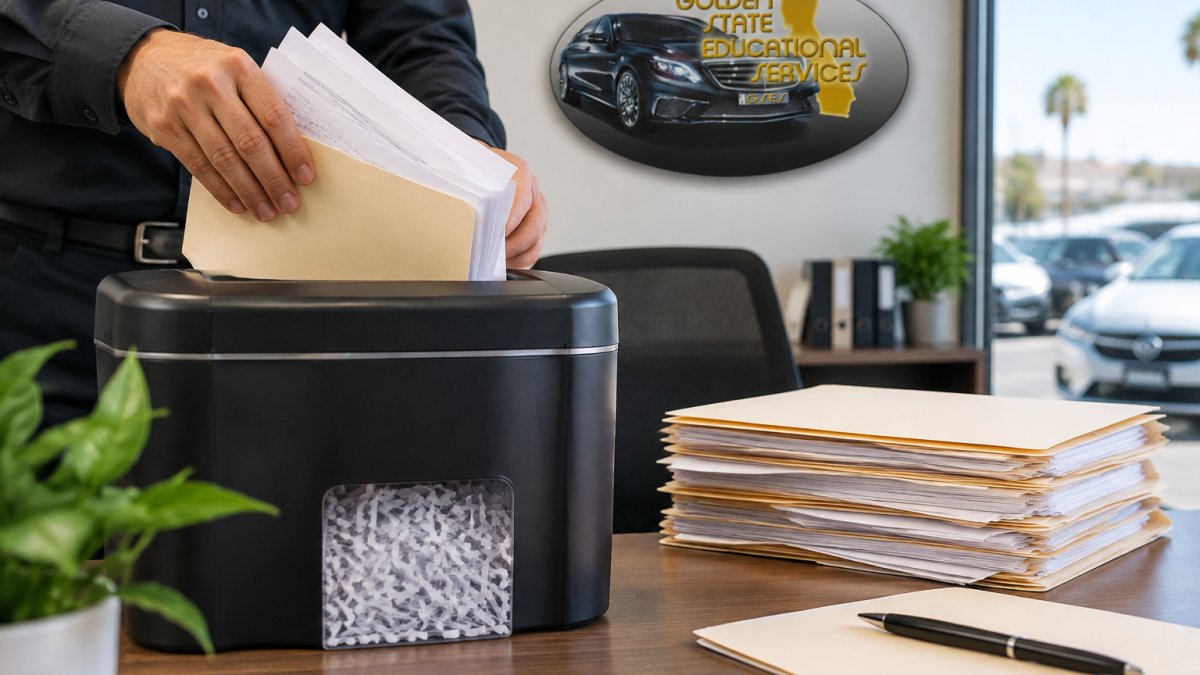
Approval is not the finish line. First-year compliance is where new dealer families get caught off guard. The DMV can audit your records, and a single missing document can put the whole family’s license at risk. Use this checklist and review it monthly, but more importantly, assign each item to a specific person and set up a system that makes compliance automatic. For practical guidance on keeping DMV records organized in year one, see our Dealership Compliance: A Practical Guide to DMV Records.
Monthly Compliance Checklist
Dealer records filed and organized by date - Every sale, disclosure, and title transfer should be in a consistent file (physical or digital). The records keeper should file new documents weekly, not monthly.
Vehicle sales paperwork complete for every deal - Check that each deal has a signed buyer’s guide, odometer disclosure, and title application. Missing signatures are a common audit finding.
Bond kept active and current - The bond and location lead should calendar the renewal date and confirm with the bond provider that the bond is still in force.
Business license renewed on schedule - Check local city or county business license renewal dates. The paperwork lead should track this alongside DMV deadlines.
Continuing education tracked for each licensee - If any family member holds a license that requires continuing education, log the hours and keep certificates.
One family member assigned as records keeper - This person is the point of contact for DMV audits and should know where every document lives.
How to Implement Each Item (and Avoid Common Family-Business Mistakes)
Records: A common mistake is letting records pile up in a glovebox or a shoebox.
Sales paperwork: For every deal, use a checklist (you can create one in a spreadsheet) that lists the required documents.
Bond: The bond is a financial guarantee that you will follow the law. If it lapses, your license can be suspended.
Business license: This is separate from the DMV dealer license. Check with your city or county for renewal requirements.
Continuing education: Not all dealer licenses require continuing education, but if yours does, track it like any other deadline.
Records keeper: This role is critical. The records keeper should be someone who is patient and consistent, not necessarily the owner.
A Family-Friendly Compliance Workflow
Set up a monthly family meeting (even 15 minutes) to review the checklist. Go through each item and confirm it is done. The records keeper leads the meeting. This simple habit keeps everyone accountable and catches problems early.
Watch Out If a family member who holds the license leaves the business, you must notify the DMV and possibly update your license. Do not wait until renewal time. The paperwork lead should track any changes in ownership or management and handle the notification.
Key Takeaway Compliance is a team effort. When every family member knows their role and the records keeper has a system, you protect the license and the business. Our in-person or Zoom classes can help you customize your system.
Dividing Licensing Tasks Across the Family
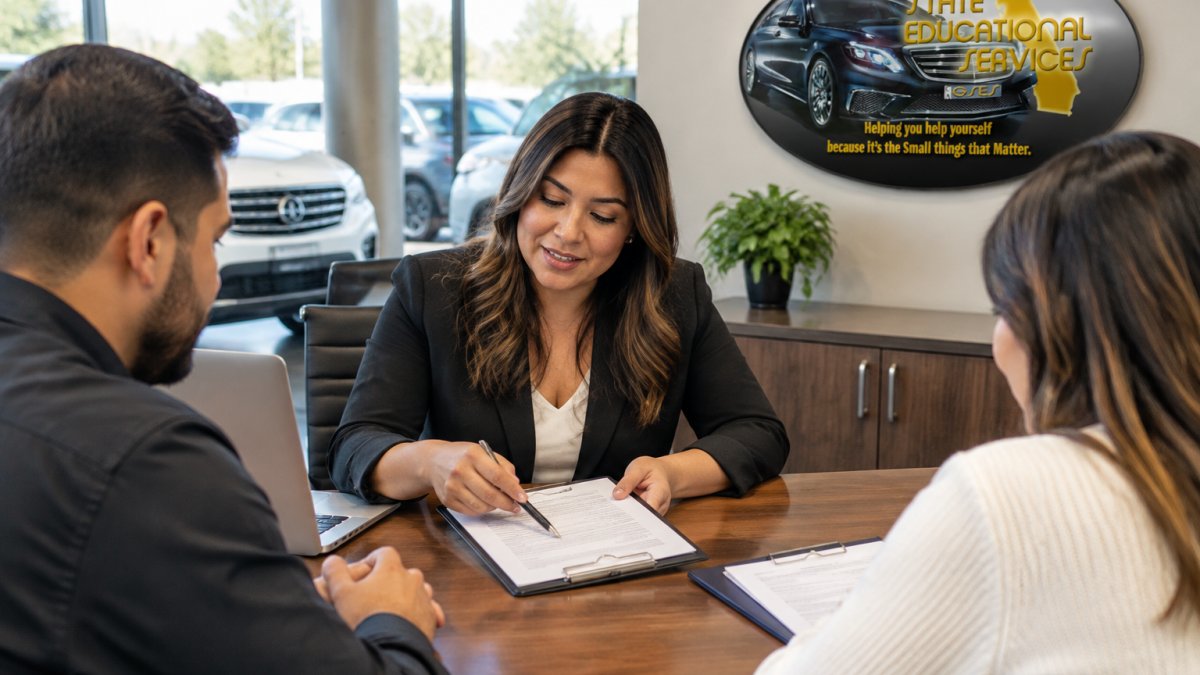
Assign roles early and write them down. Families that split tasks finish licensing faster than families where one person does everything.

Here is a more detailed breakdown of how to divide the work, including what each role actually involves and how to coordinate with the DMV.
Role | Who Fits | Main Job | Key Deliverables |
Course lead | Anyone who will be licensed | Enrolls in and completes DMV-approved pre-licensing education; shares notes with the family | Certificate of completion for each licensee; study schedule |
Paperwork lead | Detail-minded relative | Tracks all application documents, deadlines, and DMV correspondence | Shared folder with all IDs, entity filings, bond paperwork, and Live Scan results |
Bond and location lead | The organizer | Secures surety bond and ensures business location meets DMV office requirements | Bond certificate; lease or ownership documents; photos of office setup |
Records keeper | Patient, consistent person | Sets up and maintains dealer recordkeeping system from day one | Filing system (physical or digital) for sales, disclosures, and title transfers |
Backup | A second family member | Learns every step so no single point of failure exists | Cross-training on all roles; access to shared folder and passwords |
Why the backup role matters most: If the paperwork lead gets sick or the records keeper goes on vacation, someone else must know where everything lives.
Coordinating training for multiple family members: Not every relative needs to take the pre-licensing course.
Documenting responsibilities: Write down who is responsible for what and keep it in the shared folder.
Pro Tip At Golden State Educational Services, we help families map out these roles during our Zoom sessions. We can walk through the table above with you and adjust it to your family’s situation, whether you are a husband-and-wife team, a parent passing the business to a son or daughter, or siblings starting together.
Book Your Family's Dealer License Training Session
The families that succeed treat licensing as a shared project, not a solo chore. They enroll together, split the paperwork, and keep records clean from day one.
Golden State Educational Services is a California DMV-approved dealer education provider with over 20 years of experience. We offer online self-paced courses, in-person classes, and Zoom sessions. Our full-service program includes LLC or corporation filing and hands-on help through every licensing step.
Ready to start? Enroll online in minutes.
Frequently Asked Questions
What training is required to get a vehicle dealer license in California?
California requires dealer applicants to complete DMV-approved pre-licensing education before taking the dealer exam or applying. The DMV maintains a list of approved education providers for used-vehicle and wholesale-only dealers, and a Certificate of Completion from a Dealer Education Program is among the possible requirements. A commonly described pre-license course runs about six hours, though course length and requirements can vary by license category, so confirm the specifics with your provider and the DMV before you enroll.
Can family members help run a California car dealership?
Yes. Many dealerships operate as family businesses with spouses, adult children, and siblings sharing sales, paperwork, and compliance duties. The key is deciding early who holds which role and who completes the required dealer license training. If more than one family member will be involved in licensed activities, plan the training and application steps together so nobody is caught unprepared when the DMV reviews your paperwork.
Can dealer license training be completed online or by Zoom?
Online training is available through DMV-approved providers, and some providers also offer live sessions by video. Self-paced online courses let family members study around work and school schedules, while live Zoom classes keep everyone on the same timeline. Either way, confirm the provider appears on the DMV's approved education provider list before you pay for a course, and keep your Certificate of Completion somewhere the whole family can find it.
Is a wholesale dealer license right for a family business?
A wholesale-only license suits families who plan to buy and sell vehicles between dealers rather than to retail customers. It typically involves different requirements and lower estimated fees than a retail license. Confirm current amounts with the DMV. Compare both license types against your family's sales model before applying.
Your family's dealership dream is worth doing right. We'll help you complete the required training, file the paperwork correctly, and stay compliant after approval. Get started with Golden State Educational Services and put your whole family on the path to a licensed dealership.
Contact Us Today !
Add goldenstatedealer.com as a preferred source on Google →

Comments